Showing posts with label Dolls. Show all posts

Saturday, 2 June 2012

The Rhyme Stew


From The Cauldron of The Wicked Witch: The Rhyme Stew

Mary, Mary, quite contrary?
How does your garden grow?
"I live with the vague sense of unease. So how in the world would I know?"

-

Mixed Media 65 x 65 x 100 cm 

-

The sense of disproportion that I feels between the desire to create artworks and the responsibility that I carries in the world of industry. I feel that the relationship between the two world so easily gets heavier on one side – in my case the industry side – and this lopsidedness often comes with a sense of hopes and fantasies disappearing into thin air. Dreams that used to encourage are now melting; as a whole,  this work can be seen as an expression to the feeling of helplesly sinking into the world  of workplace responsibility that restrict myself every move. 
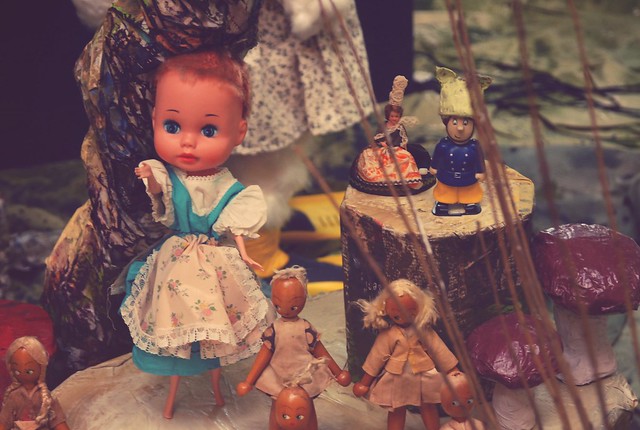
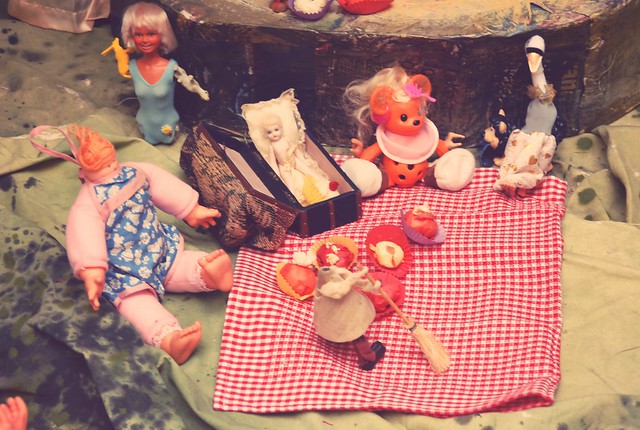
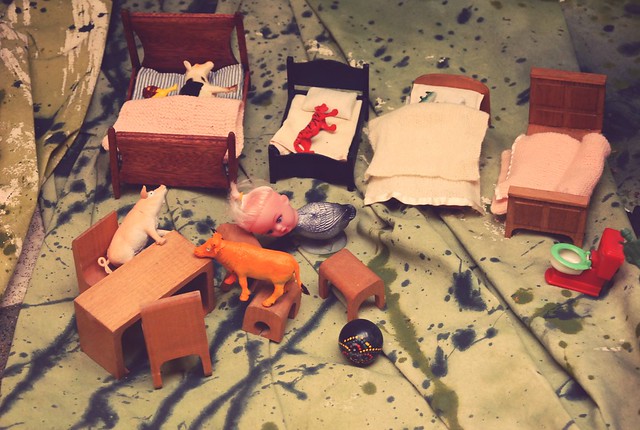
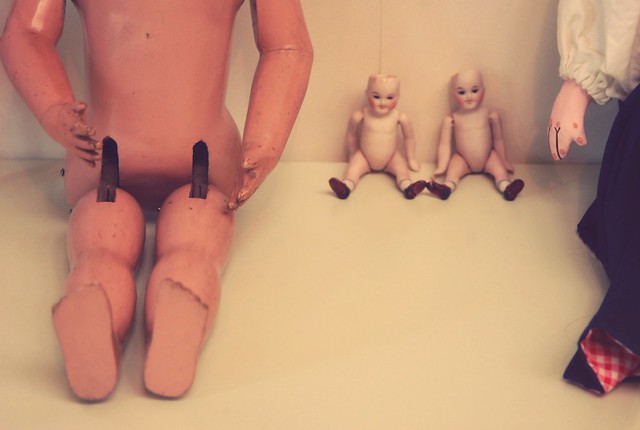
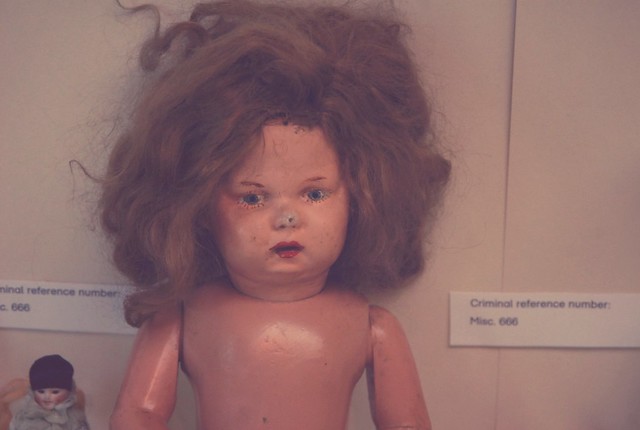
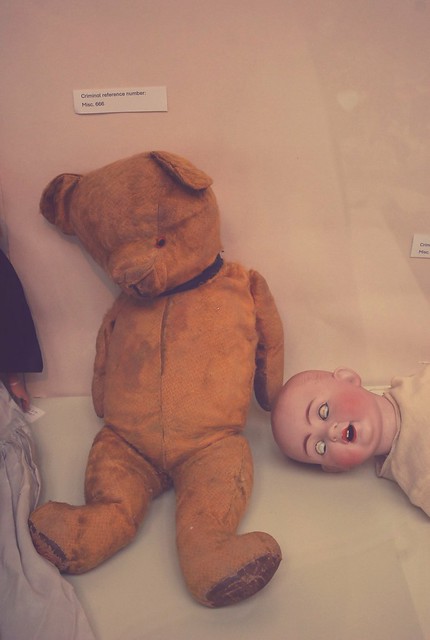
I cut my doll's head, separate it from its body, broken up only to be put back together in their unnatural places: on the surface of the table, pieces of their faces, heads, eyes, limbs, are arranged in a scattered composition.

-

Natasha Gabriella Tontey 2012


Sunday, 7 August 2011

‘The Stuff of Nightmares’ at V&A Museum of Childhood

Storytelling was an important form of popular culture for both adults and children before books became so widespread. The Brothers Grimm collected folk and fairy tales in order to preserve in oral tradition. They first published their collection of Germanic and French stories as the Grimms' Fairy Tales in 1812. The original ales were dark and sinister, depicting worlds populated by witches, trolls, goblins, and wolves, and were quite explicitly violent. Subsequent versions became somewhat sanitised for a child audience and many of the stories underpin the narrative of contemporary children's literature and film. But when re-told to children fairytales' often assume an air of innocence. Good always triumphs over evil, heroes are selfless and love is everlasting. Some fairy tales however, explore the darker side of a child’s imaginary landscape.
Some critics view the stories as gruesome, politically incorrect tales that we should protect our children from. There are very few decent adult role models and often the 'good' characters inflict some vicious form of retribution on their oppressors. Other argue that the imaginative world opened up by fairy tales allows children to escape the tedium of everyday reality and indulge in fantasies of defeating giants ogres, and monsters.
Bruno Bettleheim, the child psychologist, saw a theraupetic value in their dark subject matter. He believed fairy stories equipped the child with the tools to navigate an adult dominated world and develop survival strategies for dealing with the emotional turmoil of life. Perhaps children benefit from exposure to fear? By confronting the 'too eerie' detail of these ancient tales, they might learn some important life lessons.
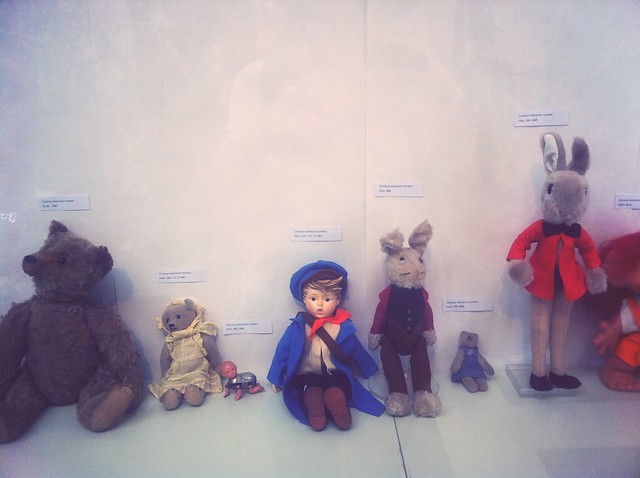
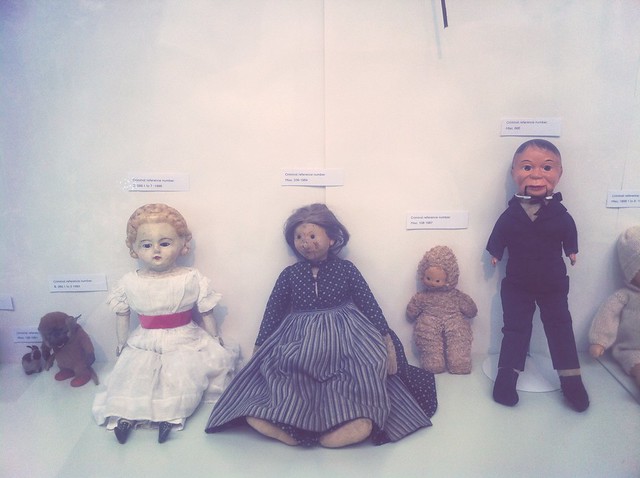
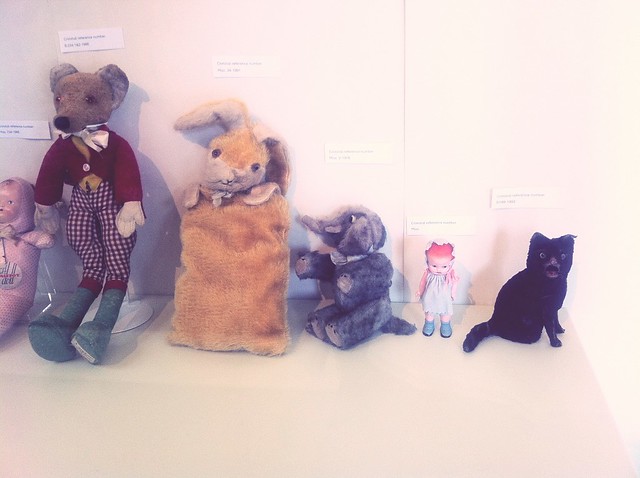
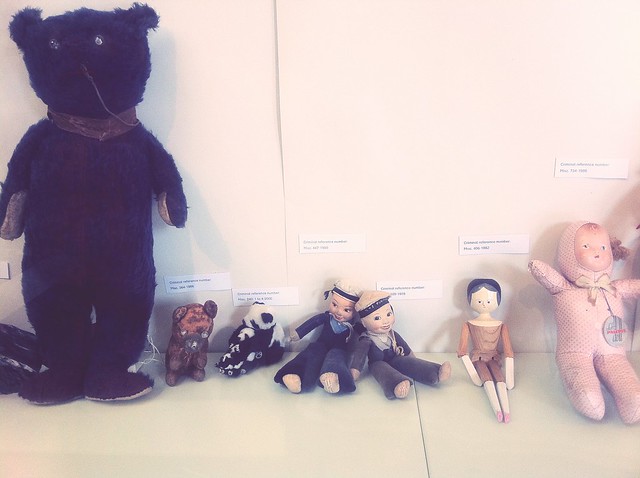
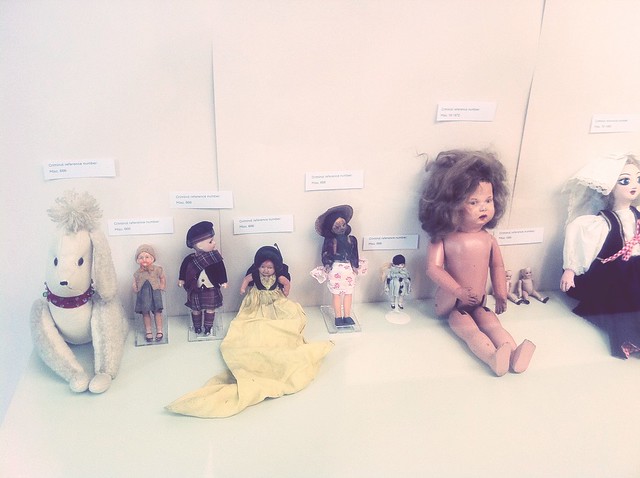
The Museum’s Front Room Gallery is transformed into a sinister forest where anything might happen, the dark setting for a re-telling of the fairytale's, a tale of abduction, fear, evil old women, revenge and ultimately, friendship. The installation were made by local school children working with artists, sits alongside work by Katherine Tulloh, Ruth Weinberg, Daniel Bell, and Sharon Brindle, which take a closer look at the playthings of innocents. The exhibition held from 26 July 2011 until 26 February 2012.

V&A Museum of Childhood


The Dolls of the Criminals
V&A Museum of Childhood: crime toys
stuff of nightmares at V&A Museum of Childhood